2026 Population Census: Starting a New Chapter
Hong Kong is a vibrant city with over 7 million people. Every one of us contributes to the city's dynamic pulse. To better understand the needs of our community, Hong Kong regularly conducts population censuses, gathering crucial data to provide vital references for the government in formulating various policies on housing, education, health, transport, etc. The 2026 Population Census marks a significant milestone, in which the Census and Statistics Department will adopt new methods to streamline the population census process and reduce costs. Let's explore what makes this census special!
A Brief History of the Population Census
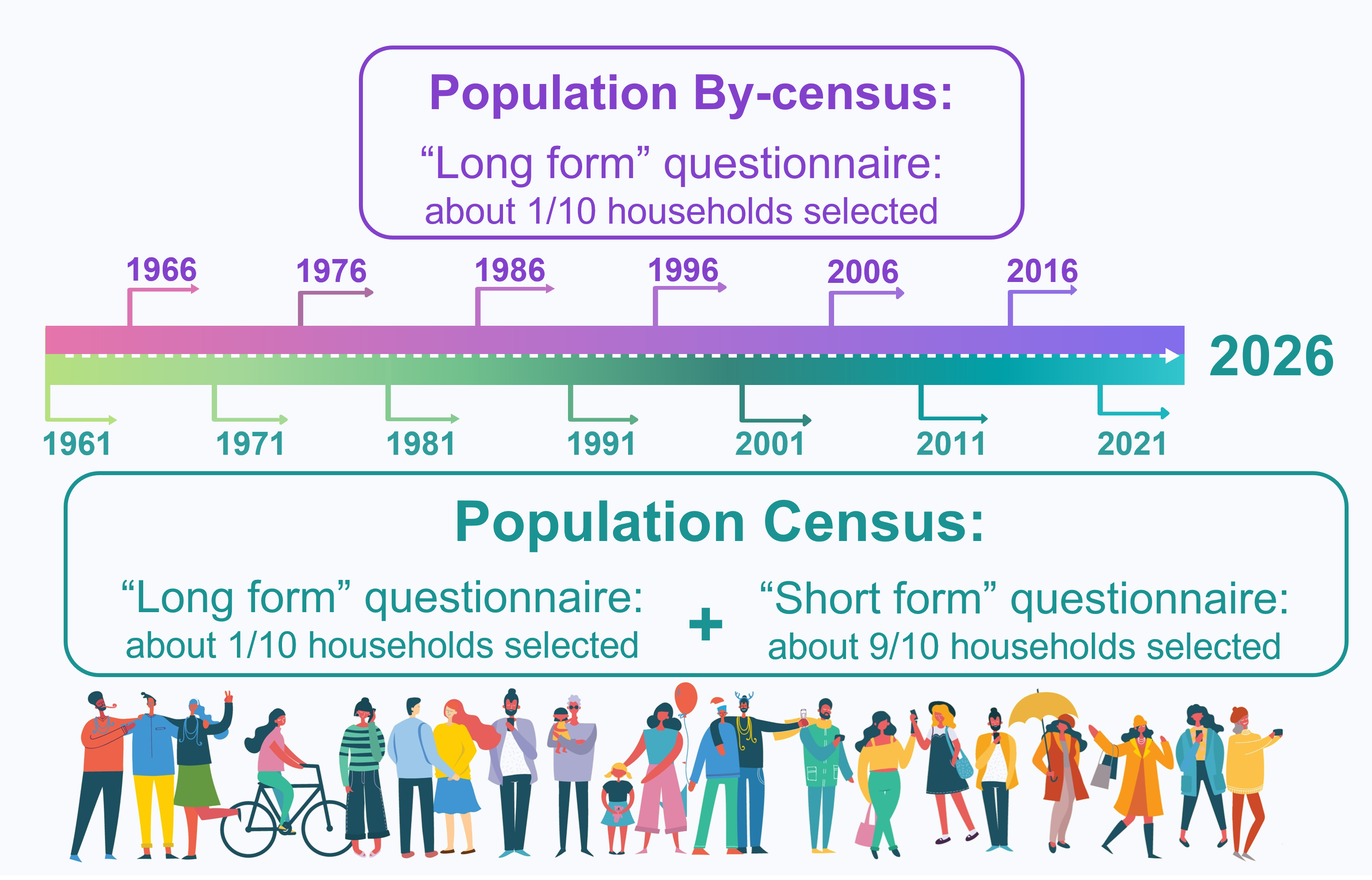
Since 1961, a population census is conducted in Hong Kong every ten years, with a population by-census held in between. As the name suggests, the population census involves a comprehensive enumeration of the entire Hong Kong population and requires full public participation. Previous population censuses comprised a simple enumeration of the majority of the households in Hong Kong (about nine-tenths was selected since the 2011 Population Census) using a "short form" questionnaire and a detailed enquiry of the remaining households using a "long form" questionnaire. Unlike the population census, the population by-census does not involve a full enumeration. Instead, a fraction of households in Hong Kong (about one-tenth since the 2006 Population By-census) were selected to complete the “long form” questionnaire for detailed enquiry.
Objectives of the Population Census
The population census is an important data source of Hong Kong, delivering critical data to guide the city's future development. It provides insight into the diverse characteristics of Hong Kong residents, such as age, sex, ethnicity, household composition, occupation, income, and education, etc. This information paints a picture of the city, enabling the government to more accurately grasp the needs of different sectors of the society and allocate resources appropriately to develop infrastructure, formulate economic policies, improve community facilities, facilitate academic research, etc. Every response contributes to the future of Hong Kong, improving city planning and development.

Re-engineering the 2026 Population Census
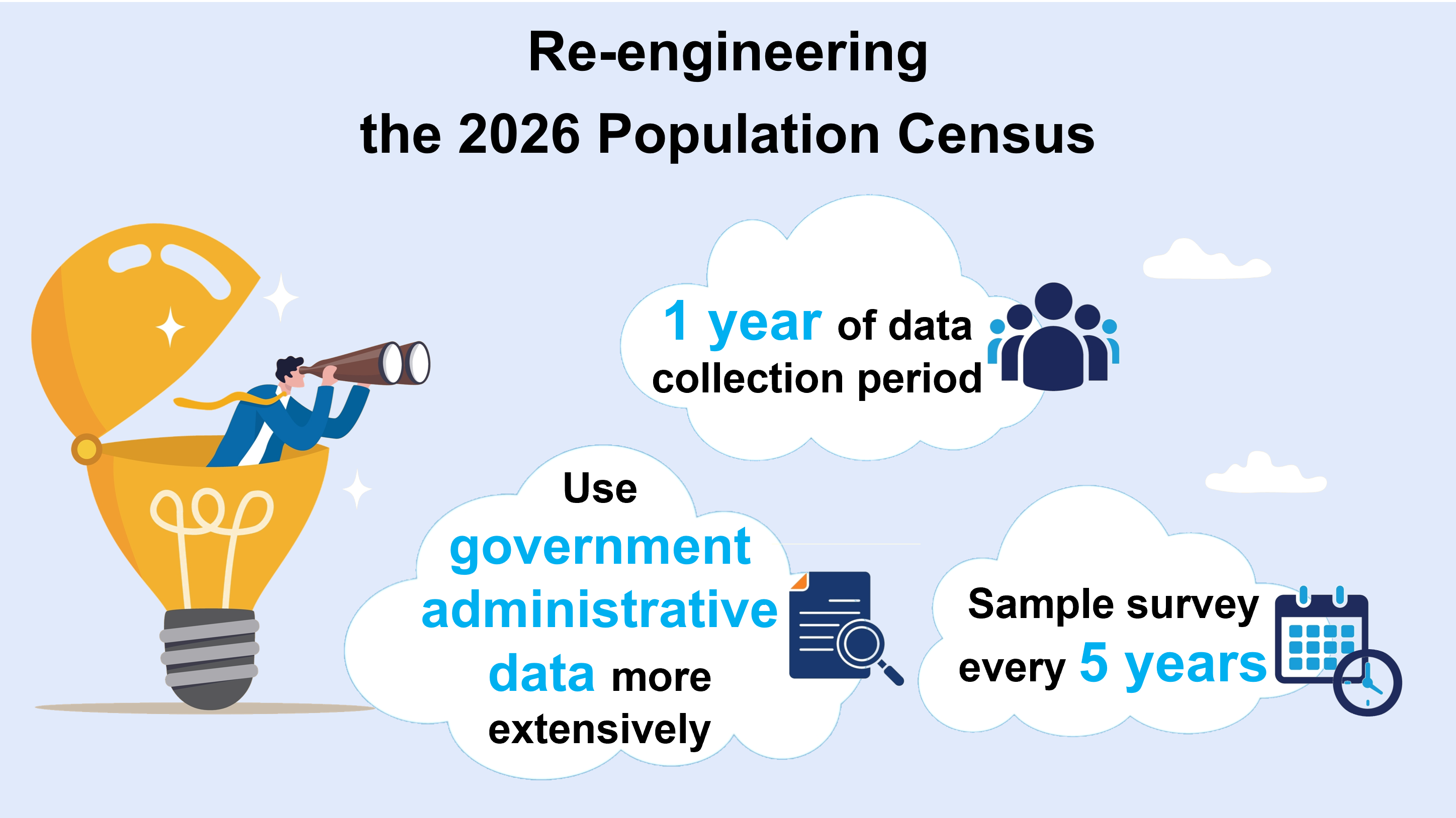
The 2026 Population Census marks the beginning of a new chapter. It is re-designed to reduce operational risks and costs. Extending the data collection period from 1.5 months to 12 months (i.e. from January to December 2026) will create a sufficient buffer to substantially reduce the possible impact of uncontrollable events, such as the outbreak of pandemics and extreme weather conditions, if any. It also allows for more flexible and effective resource allocation, and enables the formation of a smaller, more professional, and more efficient team of interviewers. This will ensure more stable and smoother population census operations.
We will also use government administrative data more extensively, such as the anonymised passenger movement, birth, deaths and various visa records provided by the Immigration Department (ImmD), as well as data from public services in areas like housing, health, social welfare, education, and even water usage.
Using the administrative data from ImmD, we will streamline the full population census into a large-scale sample survey to be conducted every five years. Our research has shown that we can ultilised these administrative data to accurately estimates the total population of Hong Kong. There will no longer be the need for nine-tenths of households to complete the "short form" questionnaire. Therefore, future population censuses will adopt the same approach as previous population by-censuses, whereby only about one-tenth of households will be selected to complete the "long form" questionnaire, while the total population counts will be derived from administrative data sources.
As for the government administrative data from other public service areas, they will supplement survey data and simplify the data collection process.
This new method will not only reduce the reporting burden on respondents, but also help improve the overall data quality.
Building a Better Hong Kong Together
The population census records more than just statistics, it also aggregates the stories of everyone living in Hong Kong, helping us paint a vivid picture of our diverse community.
The re-engineering of the 2026 Population Census not only streamlines the data collection process and reduces respondent burden, but also improves the quality of statistics in a more cost-efficient way.
Your participation is vital for the success of the 2026 Population Census. Every response contributes to the planning of a better Hong Kong. Let's work together to build our future!
For more details, please visit the thematic webpage of the 2026 Population Census: www.census2026.gov.hk.
CHUNG Ka-pui, Natalie
Statistician
18 December 2025